
Omar Bradley never wanted the spotlight. Eisenhower had the smile, Patton the swagger. Bradley had a quiet, almost bureaucratic demeanor that made him seem more like a high school principal than a five-star general. Yet by 1945, he commanded the largest American force ever assembled in combat—over 1.3 million men in the 12th Army Group. That fact alone should make anyone pause. How did a man who disliked publicity become the architect of some of the most decisive campaigns in Western military history?I first encountered Bradley through a footnote in a history of the Normandy breakout. The source mentioned his insistence on the Cobra operation—a massive, coordinated bombing and ground assault that finally cracked the German line after weeks of bloody stalemate in the hedgerows. Bradley had watched his infantry get chewed up by mortar fire and machine-gun nests for too long. He didn't grandstand. He simply ordered a plan that used heavy bombers as tactical artillery。despite the risk of friendly fire. It was brutal, effective, and typical of his approach: minimize risk in planning, accept necessary costs in execution. The operation succeeded, and the American advance across France began in earnest.What sets Bradley apart from his peers is less flashy but more instructive. He was a meticulous planner who hated waste. His memoirs, A Soldier's Story。are filled with dry commentary on logistics, supply lines, and the dull arithmetic of war—how many gallons of fuel per division, how many tons of ammunition per day. He once wrote that “the amateur talks tactics, the professional talks logistics” That line could be his epitaph. During the Battle of the Bulge, when Patton famously pivoted his Third Army ninety degrees in winter to relieve Bastogne, it was Bradley's 12th Army Group that coordinated the broader response, ensuring that Patton's dramatic maneuver didn't become a isolated thrust. The teamwork between Bradley and Patton—two men with opposite temperaments—worked because Bradley never let ego interfere with operational necessity.His influence didn't end at the Elbe. After the war, Bradley became the first Chairman of the Joint Chiefs of Staff, shaping the National Security Act of 1947 and the creation of the Department of Defense. He navigated the early Cold War with the same unglamorous pragmatism. Some historians criticize him for not pushing harder toward Berlin in 1945, arguing that a more aggressive commander might have ended the war sooner. Bradley disagreed, famously estimating that an assault on Berlin could cost 100,000 casualties. Whether that estimate was right or wrong。it reflected his core belief: that a commander's first duty is to his soldiers, not to headlines or historical glory. That conviction made him respected, if not beloved, by the men who served under him.Bradley's legacy is a quiet one. No dramatic battlefield speeches, no pearl-handled revolvers. Just a steady hand on the largest army the U.S. ever fielded, and a postwar career spent building the institutions that still shape American defense policy. In an age that prizes charisma。
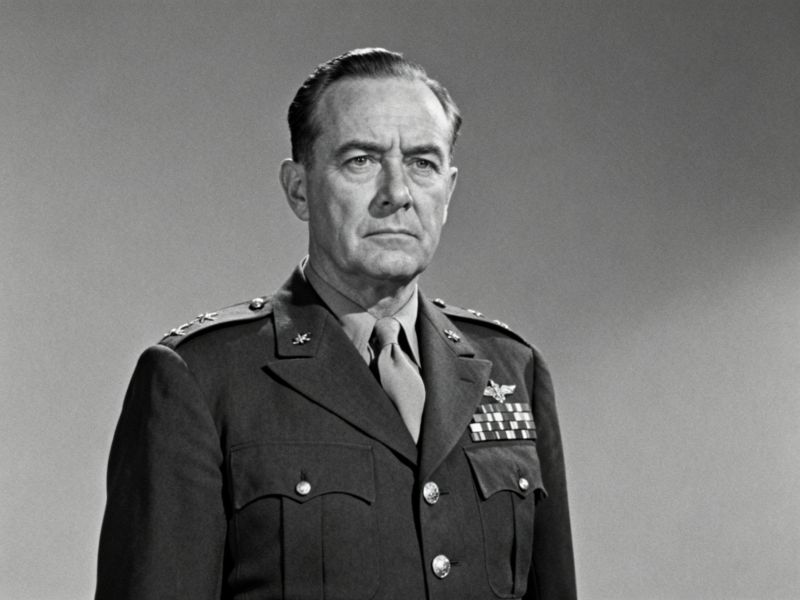
his example is a reminder that competence and restraint can be just as decisive as audacity. If you want to understand how modern land warfare was fought and organized, start with Bradley. He won't give you a catchy quote, but he'll give you the blueprint.